After Liberalism by Gottfried Paul Edward
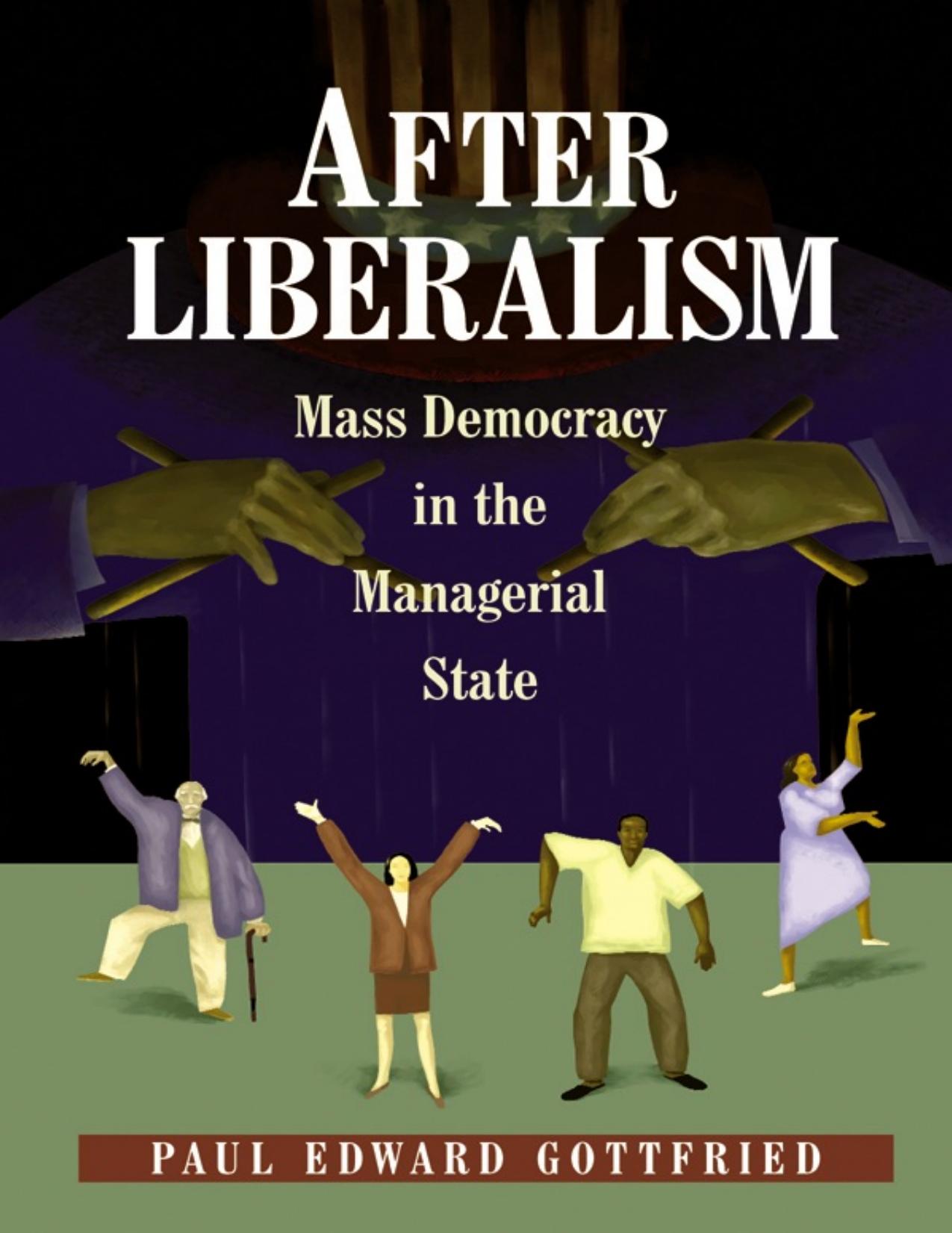
Author:Gottfried, Paul Edward
Language: eng
Format: epub, pdf
Publisher: Princeton University Press
Published: 2013-09-08T04:00:00+00:00
A PLURALIST GLOBAL SOCIETY
A critical moment in the association of pluralism with a global society was reached in the United States in the 1960s. At that time American politicians and journalists emphatically came to identify their country as a universal nation. They presented the civil rights revolution as a crucible for reforming American identity. A connection emerged between establishing equal political rights for American blacks and breaking down national barriers. The first was thought to mandate the second, as social commentator Chilton Williamson Jr. explains. The Immigration and Nationality Act passed in 1965 was more than an “homage to the late president [John Kennedy]. It was substantially the legacy of the desegregation campaign of the 1950s, an extension of the civil rights movement of the 1960s and of anticolonial sentiment following World War II.” Moreover, Willamson adds: “By 1964 Rosa Parks, the Freedom Riders, and Martin Luther King, Jr. were recognized gods in the pantheon created by a mythology more potent and influential even than immigration; it was the genius of the architects of immigration reform that they recognized the possibility for conflating the two and amalgamating them as statute law.”68
The drive toward extending equal citizenship at home and the opening of America’s borders to larger and larger numbers of Third World immigrants became related tendencies in the sixties. As Williamson notes, religious and political publications, like Christian Century and the New Republic, and such national leaders as Robert and Edward Kennedy exalted these twin missions of outreach.69 Immigration expansion and pursuing the politics of inclusiveness at home were both testimonies to an American commitment to pluralism that developed during the Great Society era. Note that one enduring legacy of that period was a new consensus about America as a fluid society and culture held together by a shared repugnance for discrimination. The point is not only that some choose to make a connection between civil rights and immigration rights, one that the New York Times now makes with regularity. It is, rather, that pluralism as a privileged Amerian creed was brought into play to justify both sets of presumed rights. It has been invoked since then to justify the movement toward a universal society together with the stifling of dissent about the implications of that movement.
In Alien Nation, Peter Brimelow, editor of Forbes, complains about the way he and other critics of liberal immigration policy have had their views subjected to “psychoanalytic babble.”70 Accusations of prejudice, with ominous references to the Holocaust and Jim Crow laws, have drowned out critical observations about the economics of increased Third World immigration, particularly from Mexico. Brimelow approaches increased immigration in terms of both its economic and cultural costs, and he makes a compelling case that since the revision of American immigration laws in 1965 and congressional legislation to reunite families, the influx of largely Third World immigrants, with few marketable skills and little incentive to assimilate, has continued to grow. The indifference of American administration has made this influx even larger and has allowed the total immigration into the United States to rise to over one million annually.
Download
This site does not store any files on its server. We only index and link to content provided by other sites. Please contact the content providers to delete copyright contents if any and email us, we'll remove relevant links or contents immediately.
| Anthropology | Archaeology |
| Philosophy | Politics & Government |
| Social Sciences | Sociology |
| Women's Studies |
The Secret History by Donna Tartt(19480)
The Social Justice Warrior Handbook by Lisa De Pasquale(12301)
Thirteen Reasons Why by Jay Asher(9135)
This Is How You Lose Her by Junot Diaz(7062)
Weapons of Math Destruction by Cathy O'Neil(6487)
Zero to One by Peter Thiel(5955)
Beartown by Fredrik Backman(5952)
The Myth of the Strong Leader by Archie Brown(5632)
The Fire Next Time by James Baldwin(5596)
How Democracies Die by Steven Levitsky & Daniel Ziblatt(5338)
Promise Me, Dad by Joe Biden(5238)
Stone's Rules by Roger Stone(5197)
A Higher Loyalty: Truth, Lies, and Leadership by James Comey(5092)
100 Deadly Skills by Clint Emerson(5034)
Rise and Kill First by Ronen Bergman(4909)
Secrecy World by Jake Bernstein(4897)
The David Icke Guide to the Global Conspiracy (and how to end it) by David Icke(4856)
The Doomsday Machine by Daniel Ellsberg(4632)
The Farm by Tom Rob Smith(4614)
